
Invasive Aedes vs. Native mosquitoes: What Jackson County Residents Should Know
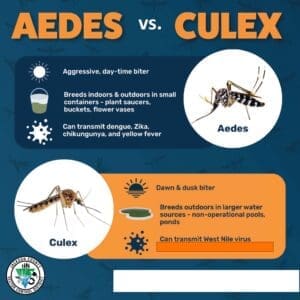
Here’s a quicky breakdown of some of the differences between the invasive mosquito species Aedes aegypti and our native Culex pipiens. Knowing key differences between the two can be helpful for homeowners as both species can be found in urban and suburban areas where they take advantage of water-filled artificial containers for breeding.
🦟 Invasive Aedes Mosquitoes
Invasive Aedes mosquitoes—especially Aedes aegypti —are container breeders that prefer to lay eggs in small amounts of water around homes.
- Active: Aggressive daytime biters
- Breeding sites: Buckets, toys, plant saucers, tarps, tires, and other small containers
- Behavior: Almost always close to homes and people
- Diseases: Worldwide, are key vectors of Dengue, Zika, chikungunya (these diseases are not currently circulating in Oregon)
- Local concern for establishment: Early detection and prevention are crucial, especially with increased movement of invasive species across the West
These mosquitoes thrive in urban and suburban areas, making source reduction around homes especially important!
🦟 Culex Mosquitoes
Culex mosquitoes—especially Culex pipiens and Culex tarsalis—are the primary vectors of West Nile virus in Jackson County.
- Active: Primarily dusk and nighttime biters
- Breeding sites: Larger, stagnant water sources such as ponds, ditches, storm drains, and neglected swimming pools
- Behavior: Travel farther from breeding sites
- Local disease risk: West Nile virus, St. Louis Encephalitis, Western Equine Encephalitis
- Surveillance: Collected weekly in traps and tested throughout the mid to late summer in Jackson County
These species are the focus of our West Nile virus testing program each summer.
🧭 Why the Difference Matters
- Invasive Aedes mosquitoes require strict container cleanup around homes.
- Culex mosquitoes require monitoring of larger water sources and seasonal testing.
- Knowing which species is active helps guide targeted control, public education, and disease prevention.
📝 How Residents Can Help
- Dump and drain containers weekly to prevent Aedes breeding.
- Report standing water, green pools, or mosquito activity through our online service request system.
- Refresh birdbaths and outdoor pet dishes regularly.
- Use EPA‑registered repellents, especially at dusk when Culex mosquitoes are active.