
Even though August feels like peak summer—dry trails, hot afternoons, and long evenings outside—ticks haven’t checked out for the season. In Jackson County, several species remain active through late summer, especially in shaded, brushy, or irrigated areas where moisture lingers.
What residents should know in August:
- Nymphs are still a concern. These tiny, poppy‑seed–sized ticks are easy to miss and can remain active into late summer in cooler microhabitats.
- Irrigated landscapes stay inviting. Lawns, gardens, greenbelts, and shaded creek corridors can hold enough moisture for ticks to persist even in August heat.
- Wildlife movement increases at dawn and dusk. Deer, rodents, and other hosts bring ticks closer to homes and trails.
- Outdoor recreation = exposure. Camping, blackberry picking, trail work, and river access all put people in prime tick habitat.
Simple steps to stay protected:
- Use EPA‑registered repellents (DEET, picaridin, IR3535, or oil of lemon eucalyptus).
- Wear light‑colored clothing and do a quick tick check after being outdoors.
- Keep yards trimmed and reduce brushy edges where ticks hide.
- Shower within two hours of coming inside to help spot any hitchhikers.
If you find a tick:
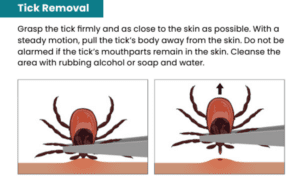
Remove it promptly with fine‑tipped tweezers and save it in a sealed bag or container. Residents can submit ticks to Jackson County Vector Control District for identification.
The 2 Most Common Ticks in Jackson County, Oregon
Southern Oregon has a surprising amount of tick diversity, but two species make up the vast majority of what people (and pets) encounter. Knowing what each one looks like—and what they’re associated with—helps residents stay aware year‑round.
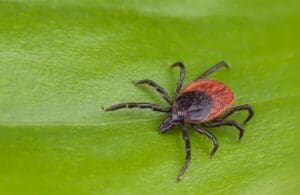
1. Western Black‑Legged Tick (Ixodes pacificus) Our primary Lyme disease vector in Southern Oregon- Active fall through spring, with nymphs peaking in late spring–early summer
- Prefers oak woodlands, chaparral, shaded trails, creek corridors
- Adults are small, dark brown/black, with a teardrop shape
- Nymphs are tiny—poppy‑seed sized—and easy to miss
- Most likely to bite humans, hikers, and pets
Why it matters: This is the species associated with Lyme disease and other Borrelia infections in Oregon. Even though activity slows in hot months, shaded and irrigated areas can still harbor nymphs into August.
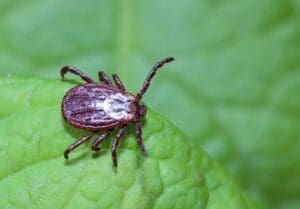
2. American Dog Tick (Dermacentor variabilis) A familiar, wide‑ranging tick that loves open areas
- Likes grassy fields, edges of yards, parks, and river corridors
- Adults are large, reddish‑brown with a patterned scutum
- Most active in late spring through summer
- Common on dogs, but will bite humans too
Why it matters: It can transmit Rocky Mountain spotted fever and causes strong local reactions.
August may feel like the “safe zone,” but ticks are still out there—just quieter, smaller, and easier to overlook. Staying aware keeps summer adventures fun and bite‑free.
Board of Trustees Places Local Option Levy on the November 2026 Ballot
The Jackson County Vector Control District Board of Trustees — Craig Hility, Mike Taylor, Bruce Jackson, Cal Lanfear, and Robin Norris — has voted to place a local option levy on the November 2026 ballot.
The District requires additional funding to respond to increased demands for service and the rising costs to provide them. The proposed levy is $0.05 per $1,000 of assessed property value (about $1.25 per month / $15 per year for the average property owner).
To learn more, click here: Local Option Levy